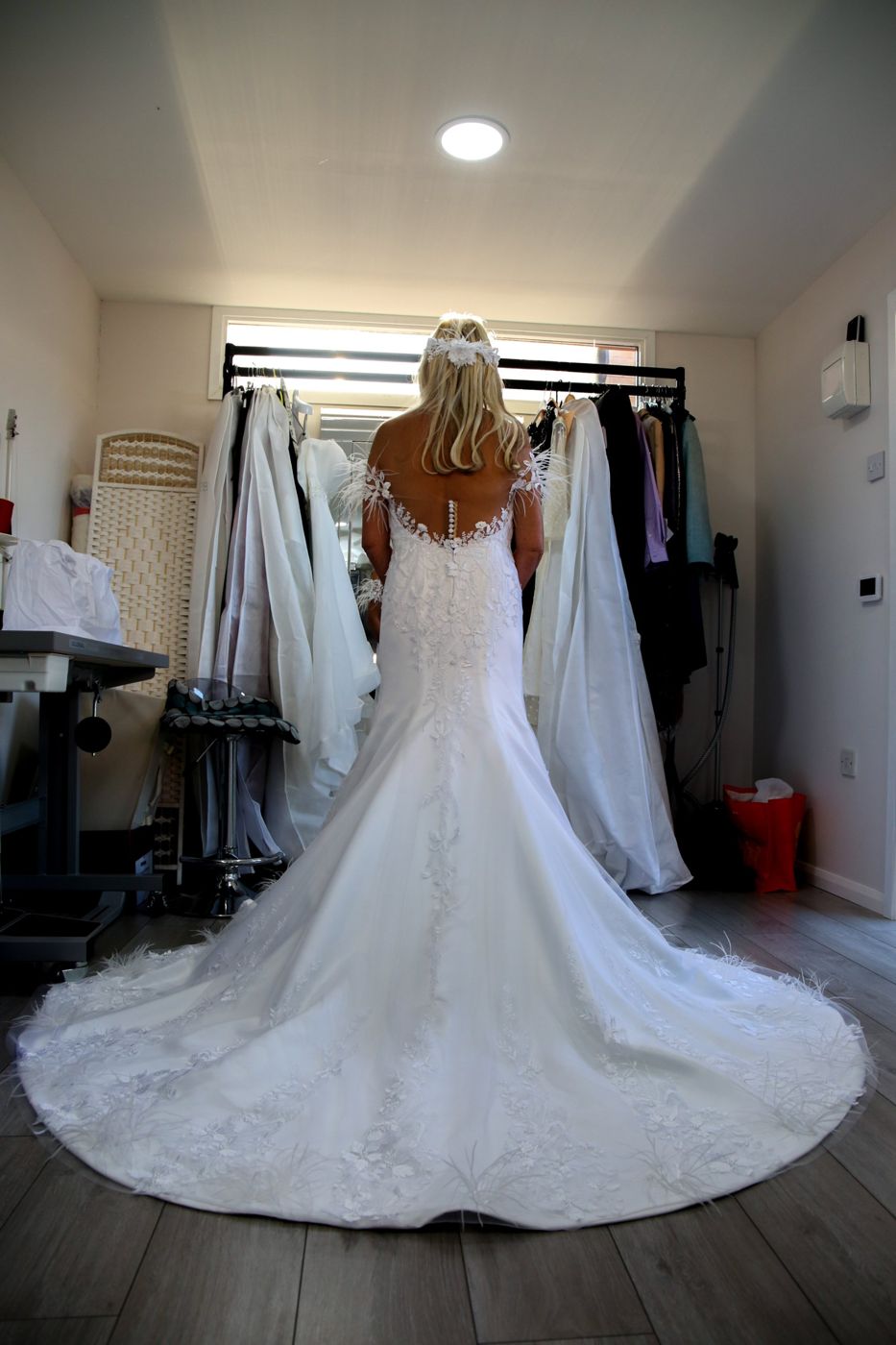
Many brides imagine walking down the aisle with a beautiful train flowing behind their dress. However, after the ceremony, that train can easily become a problem when you’re hugging guests, taking photos, or dancing.
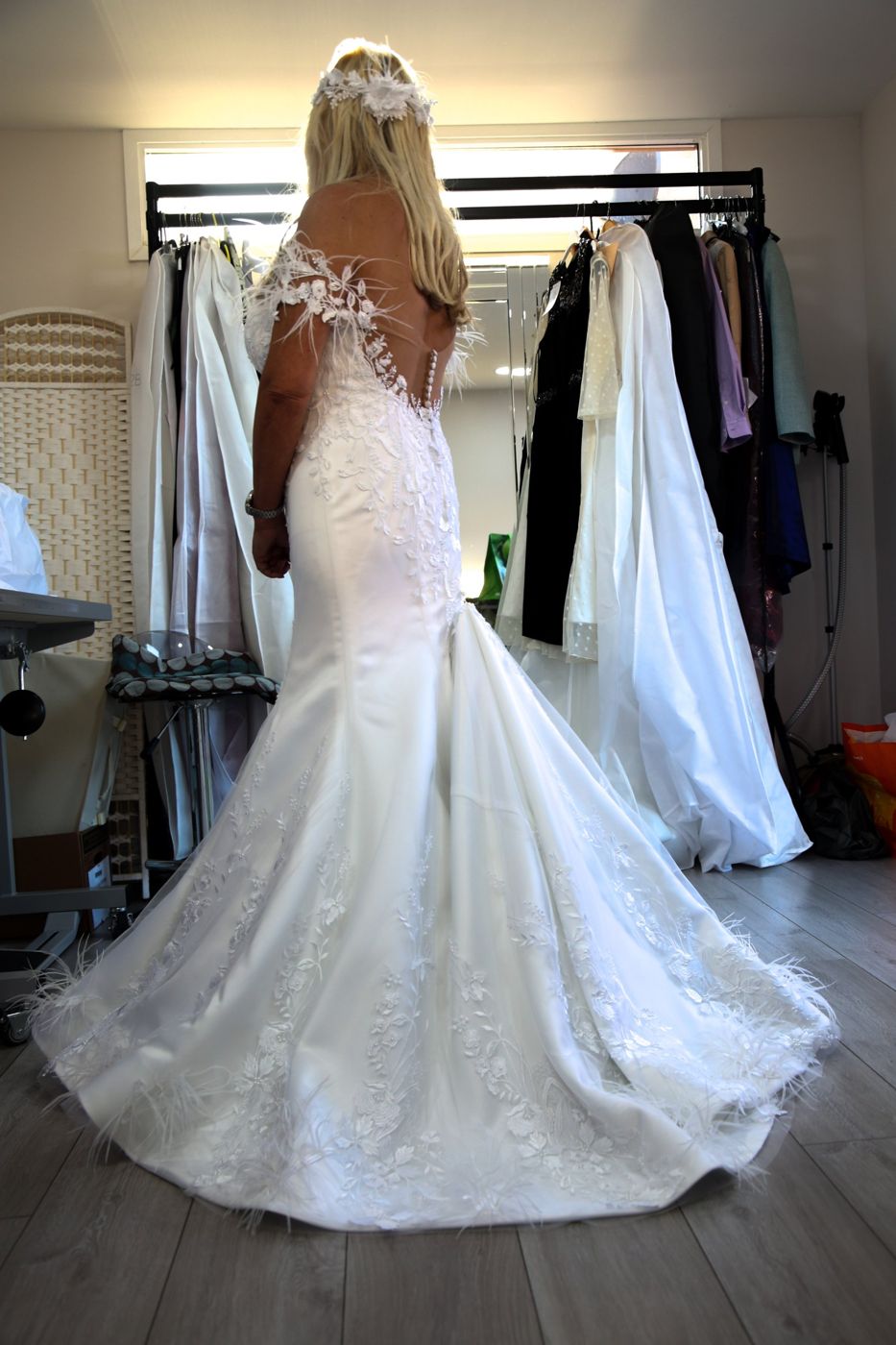
This is where a bustle becomes useful. A bustle is a wedding dress alteration that lifts and secures the train, allowing you to move comfortably while keeping the gown looking elegant.
This guide explains what a wedding dress bustle is, the different styles available, and how to make sure yours works well on your special day.
What Is a Wedding Dress Bustle?
A wedding dress bustle is a way of securing the train of your gown and lifting it off the ground after the ceremony. It is usually made with hooks, buttons and loops, or ribbons sewn into the dress during alterations, allowing an easy change from ceremony to reception.
The name comes from the 19th-century bustle, a pad or frame worn under the skirt to lift the back of the dress. Today’s wedding bustles are practical rather than a fashion item, but they still look elegant and help protect your dress from dirt and damage as you dance the night away.
Why Might a Bride Need a Wedding Bustle?
One of the main reasons brides choose a wedding dress bustle is practicality.
While trains are stunning as you walk down the aisle, they can become cumbersome during the reception. Without a bustle, you might constantly be managing your dress, tripping over the fabric, or having guests accidentally step on it while socialising or dancing. A bustle lifts and secures the train, so you can move freely and comfortably throughout the night.
Another reason is protecting the dress. Wedding gowns are delicate and often made from lace, silk or tulle. Letting the train drag for hours increases the risk of snags, stains and tears, especially on outdoor surfaces. A bustle helps keep the hem cleaner and reduces wear.
Lastly, a bustle can change the look of your gown. Depending on its style, it can add volume or create a different silhouette for the evening, like giving your dress a “second look” without changing into another outfit.
Do I need a bustle for my wedding dress? A bustle is useful if your gown has a train that would otherwise trail behind you during the reception. Dresses without a train may not need one.
Types of Wedding Bustles
Not all bustles look the same, and the right choice depends on your gown’s design, how it is made, and the look you prefer. Here are the most common types:
- Overbustle (American Bustle). The train is lifted and fastened to points on the outside of the skirt, creating folds that drape over the back of the dress. It’s simple, classic, and works for many dress styles.
- Underbustle (French Bustle). The train is folded under the skirt and tied with ribbons underneath. The fastenings are hidden, while the fabric forms soft folds or tiers at the back.
- Austrian Bustle. Uses a ribbon or drawstring sewn into the back of the gown to gather the train upwards into vertical ruching, for a dramatic, textured look.
- Ballroom Bustle. The train is folded and secured underneath the skirt at several points, so the dress looks floor-length without a train.
- Combination Bustles. Some gowns, especially those with layered or unusually shaped trains, work best with a mix of methods. A skilled seamstress can combine techniques to suit your dress.
How to Choose the Right Wedding Dress Bustle
Each gown is different, and the bustle that suits one bride perfectly might not be right for another. Consider these key factors when deciding:
1. Gown Style and Fabric
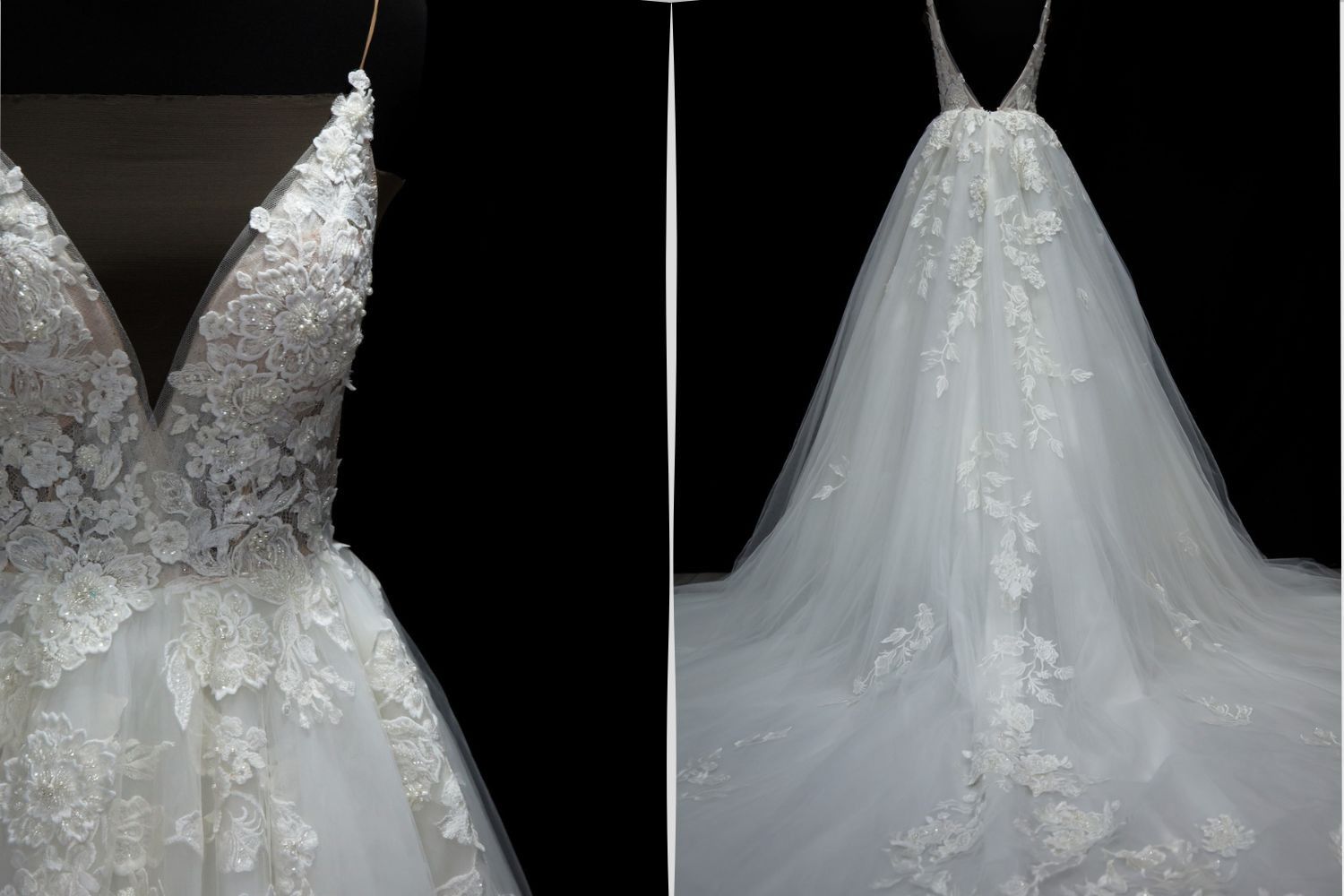
Your dress’s construction helps decide which bustle styles are practical. The length, width and weight of the train, the number of layers, and any embellishment all affect how many attachment points are needed and where they go. A short, narrow train may need only a few, while a long, wide or heavily embellished train may need more. Delicate fabrics such as chiffon or organza also need carefully supported attachment points so they don’t snag or pull. Your seamstress will help you find an option that balances support with appearance.
2. Venue Considerations
Think about the surfaces you will walk on, especially grass, gravel, sand or uneven ground, and tell your seamstress so she can plan how the bustled train will sit. Whether your reception is indoors or outdoors, the bustle should lift the train enough for you to move comfortably and keep it from being stepped on. Bear in mind that a bustle lifts the train, not necessarily the whole hem of the dress.
3. Comfort and Movement
Your bustle should not only look beautiful but also let you move comfortably. Once it’s in place, you’ll be walking, greeting guests and dancing, sometimes for hours. Always test it at your fitting: walk, sit, turn and practise a few dance steps. If the bustle pulls, shifts, restricts your movement or leaves fabric trailing where it could be stepped on, ask your seamstress to adjust it.
4. Aesthetic and Style Preference
The bustle changes the silhouette of your gown, so consider how you want your dress to look for the rest of the day.
Some brides love the cascading folds of an overbustle (American bustle), which add drama and texture to the skirt. Others prefer a French bustle, with its hidden fastenings and softly tucked folds. If you’re looking for something more distinctive, an Austrian bustle with its ruched effect might be an eye-catching choice.
5. Your Seamstress’s Expertise
Most wedding dress bustles are planned individually during alterations. An experienced bridal seamstress will look at the train’s shape, weight, layers and embellishment, and where it can safely be attached, before recommending a French bustle, American bustle or another option. Some gowns benefit from a combination of techniques.
The goal is a bustle that keeps the dress looking beautiful while allowing you to move comfortably, dance and enjoy the celebration without worrying about the train.
Wedding Bustle Fittings and Alterations
Wedding dress bustles are an important part of wedding dress alterations.
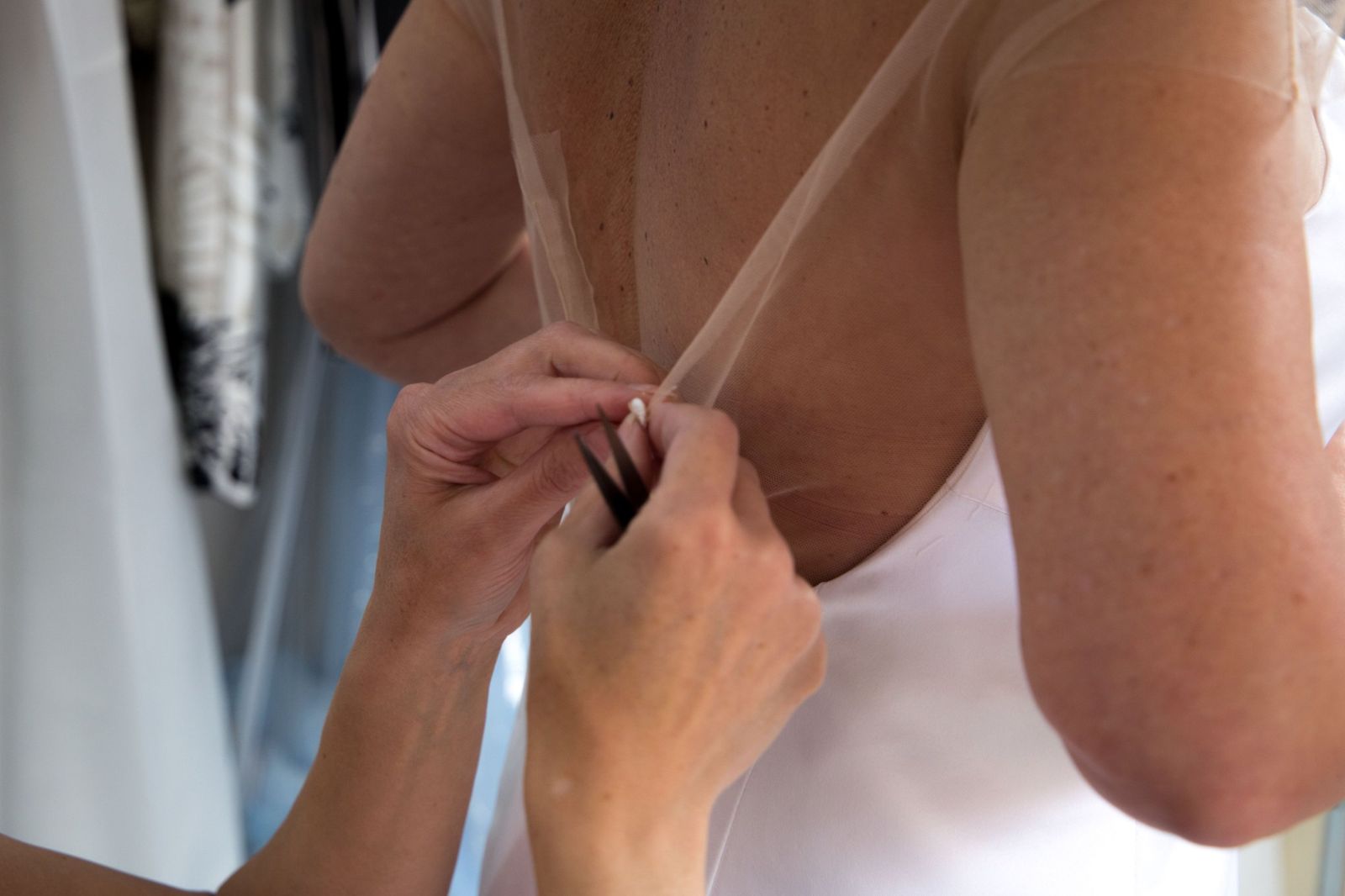
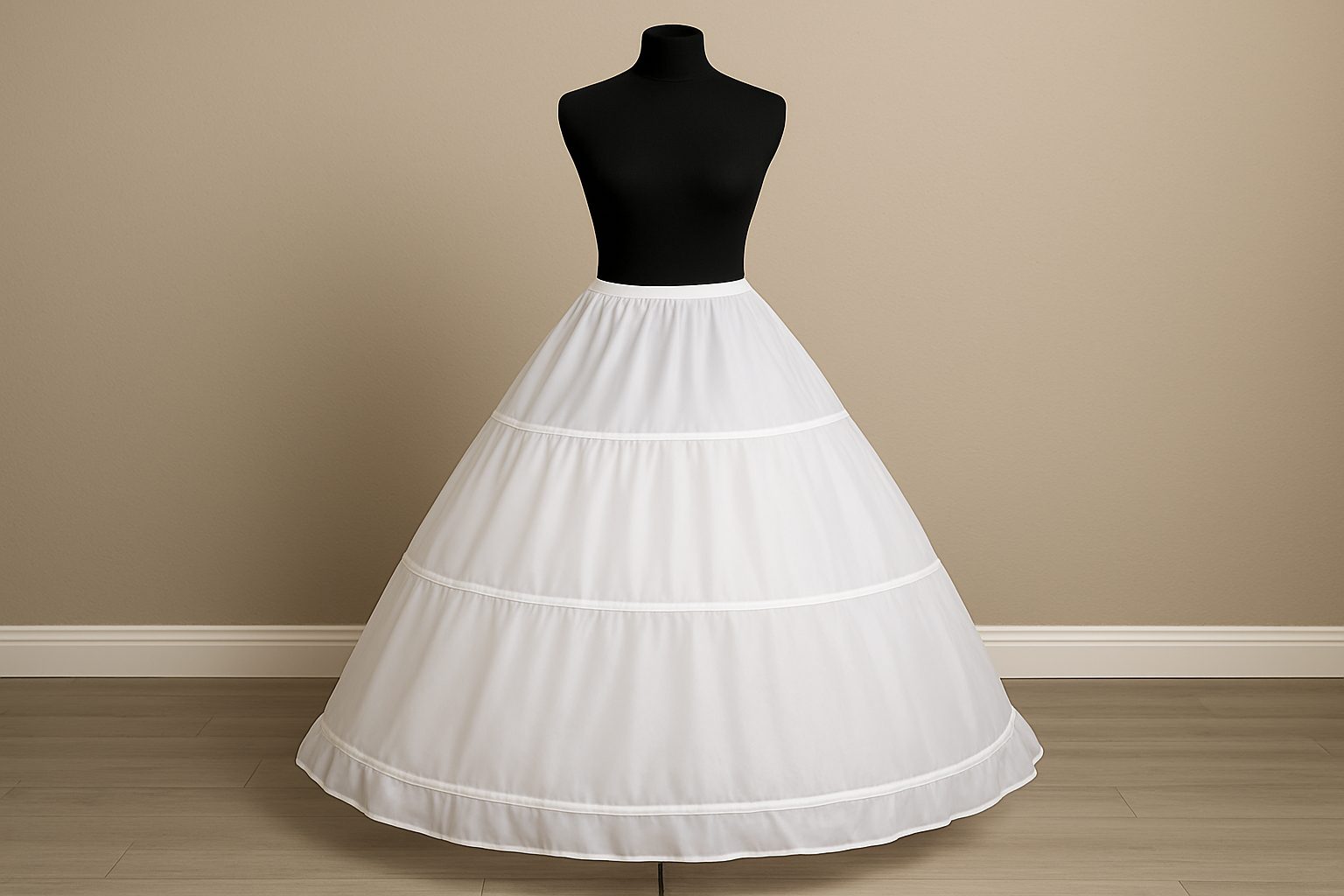
It’s best to discuss your bustle early in the alterations process, so it can be included in your plan. The attachment points are then finalised once the fit of the dress and the hem length are set, so bring your wedding shoes and petticoat to your fittings.
At your final fitting, your seamstress will show you how the bustle works and how to fasten it. It’s a good idea for the person who will help you on the day, such as a bridesmaid or family member, to come along and practise too. With permission, they can also film a short demonstration to look back on.
What Affects the Cost of Adding a Bustle?
The cost depends on the work required: the style of bustle, the number of attachment points, how the train is made, and any delicate lace or beading that needs to be worked around. At iStitch, we always agree a clear quote with you at your free consultation before any work starts.
Wedding Dress Bustle Tips for Brides
- Assign a helper and practise. Choose someone you trust, like a bridesmaid or family member, to be your “wedding dress bustle expert”. Make sure they practise bustling your dress before the wedding, so you can enjoy your day with greater confidence.
- Prefer not to worry about it? Our Diamond Collection bridal attendant package includes post-ceremony bustle support, so we bustle your dress for you after the ceremony.
- Keep a small emergency kit. A small sewing kit and a few safety pins are useful for minor problems, but tape should never be relied on to hold up a train. If a fastening breaks, don’t force the remaining points to carry the weight; ask your seamstress what to pack for your particular gown.
- Test it out. At your fitting, walk and move in your bustled gown to make sure it works well and looks good, and ask for adjustments if any fabric catches or pulls.
Let Us Perfect Your Gown
We don’t just specialise in wedding dress alterations, we also create custom bustles for wedding gowns. They are designed to fit your gown beautifully and keep you comfortable on your big day. Whether you need a simple bustle for your wedding dress or a more intricate design, our expert bridal seamstress will make sure it looks stunning and works well.
Contact us to book your bustle appointment.
Wedding Dress Alterations in Peterborough
Looking for a professional wedding dress seamstress in Peterborough?
At iStitch, we specialise in wedding dress alterations, bridesmaid and prom dress alterations and customisation, helping brides feel confident and beautiful on their special day. Contact us to book your free consultation for dress alterations in Peterborough.
See what our clients have to say about us.

Expert seamstress advice from iStitch
Over 35 years of dressmaking experience, Peterborough. About us