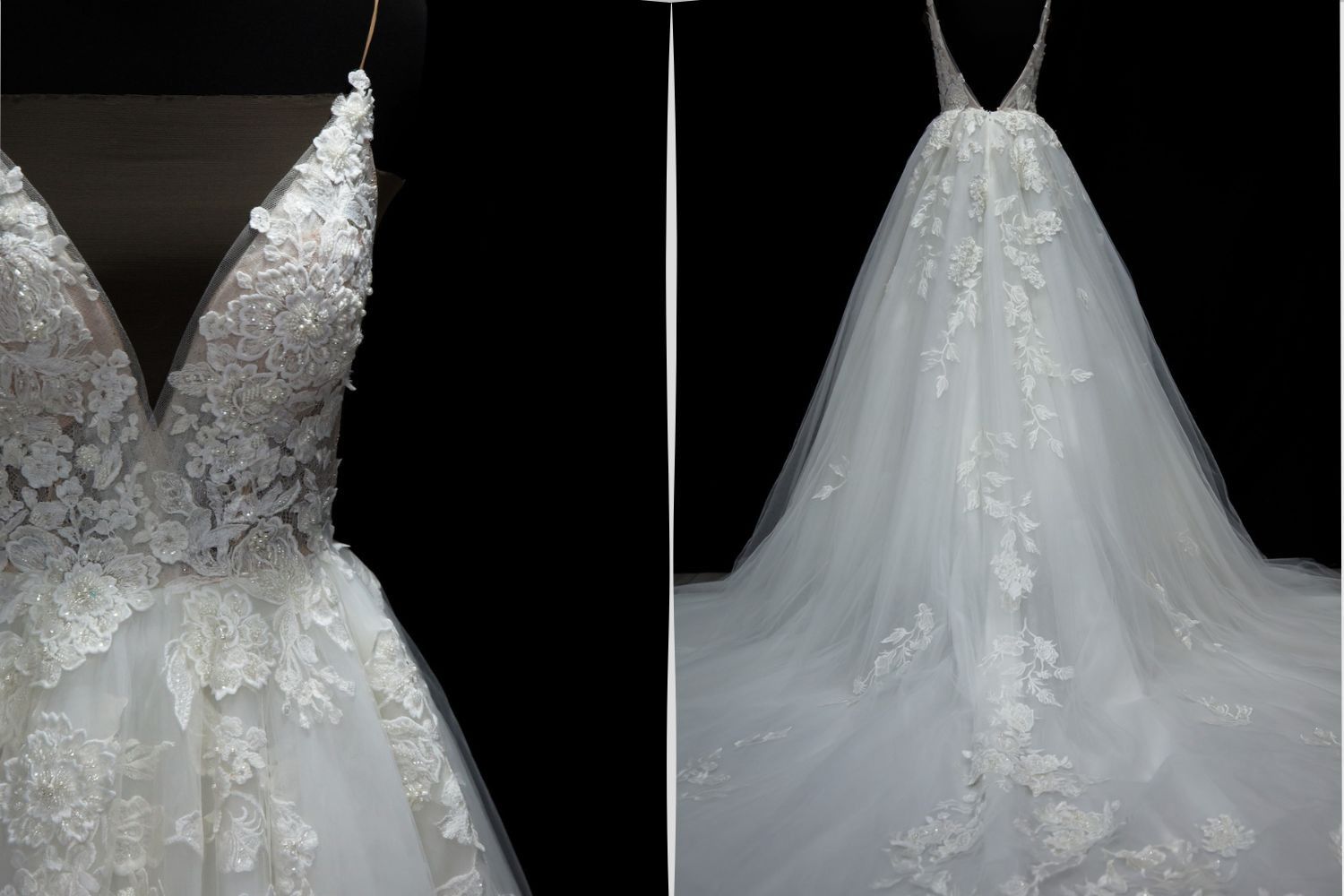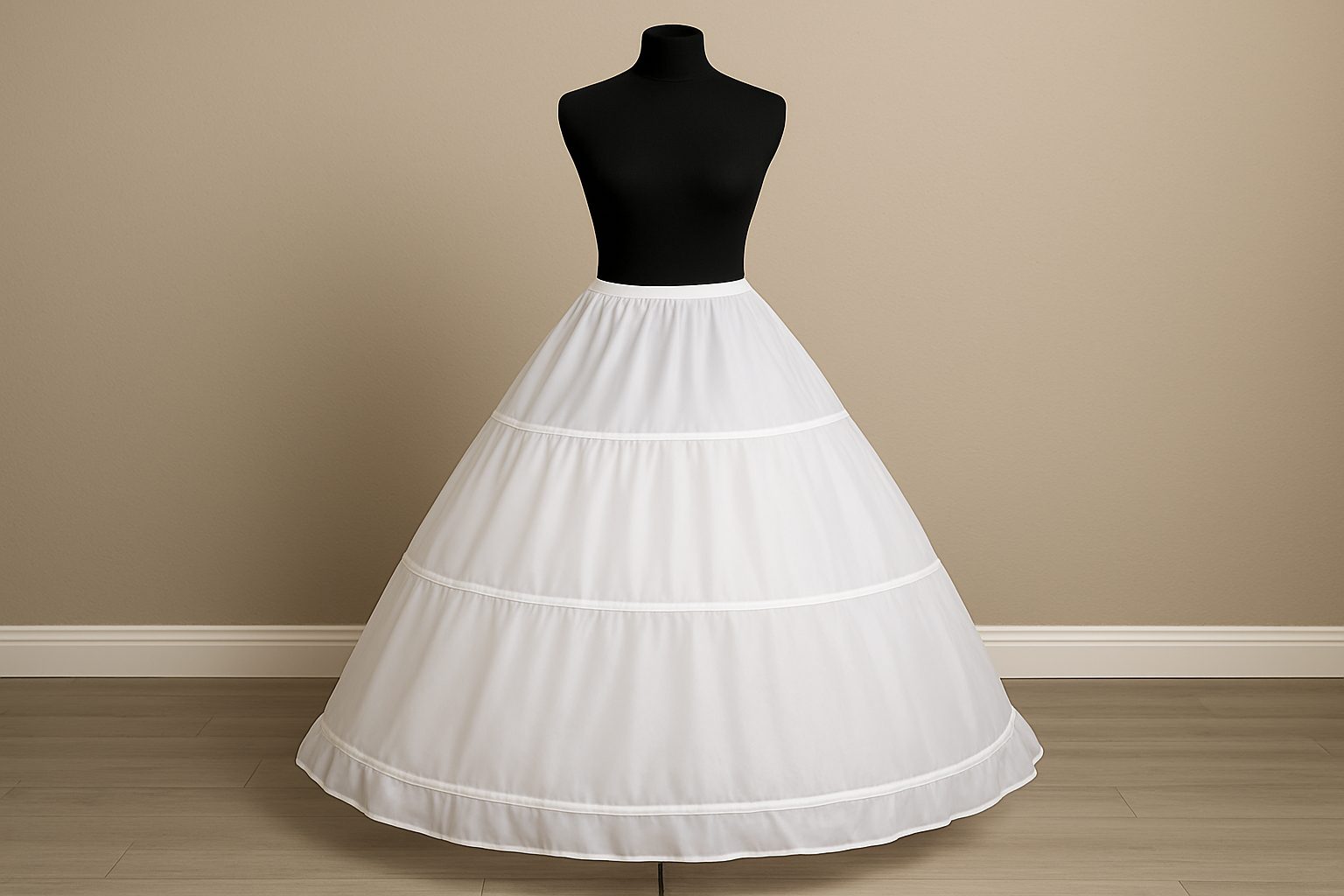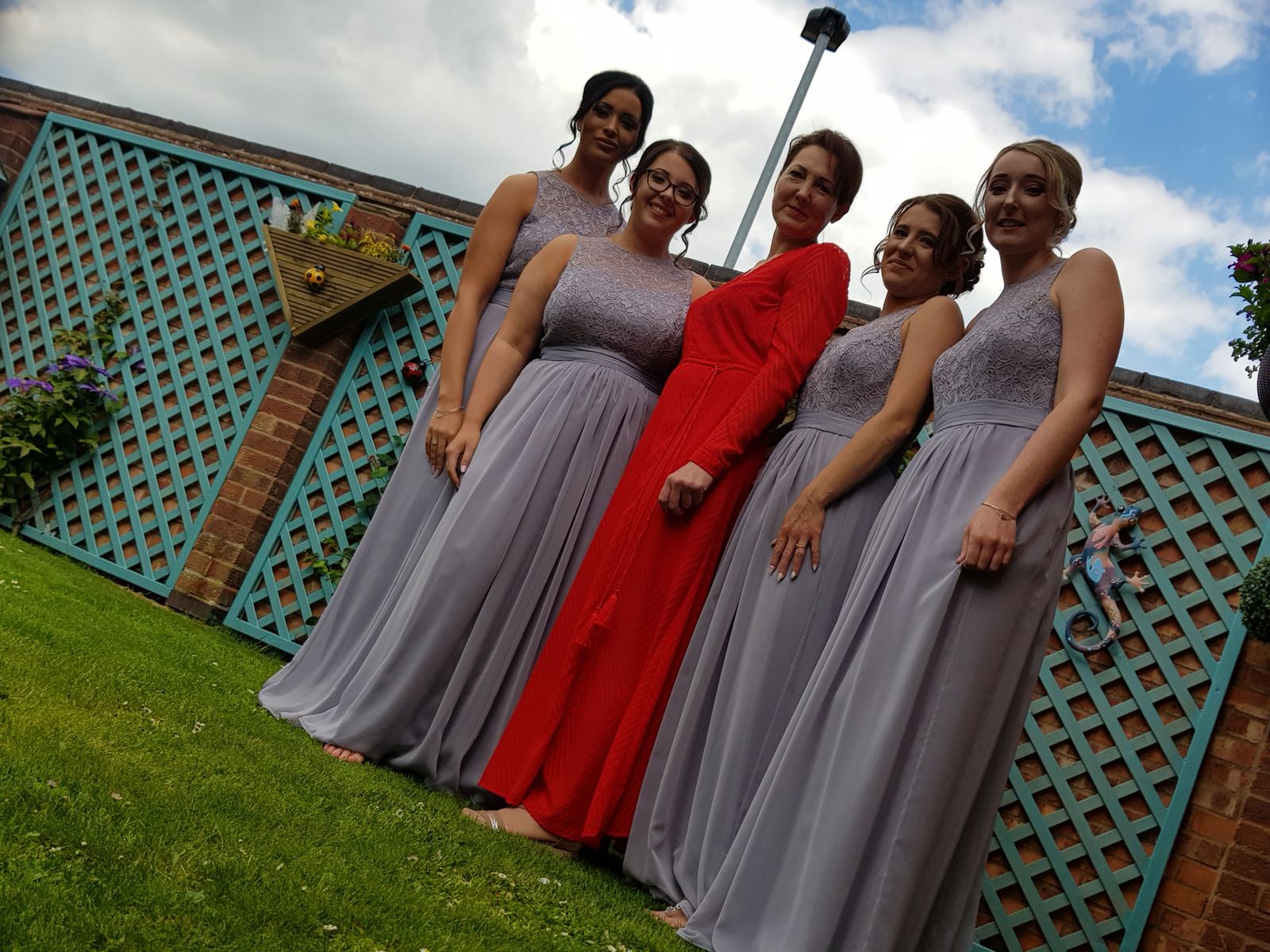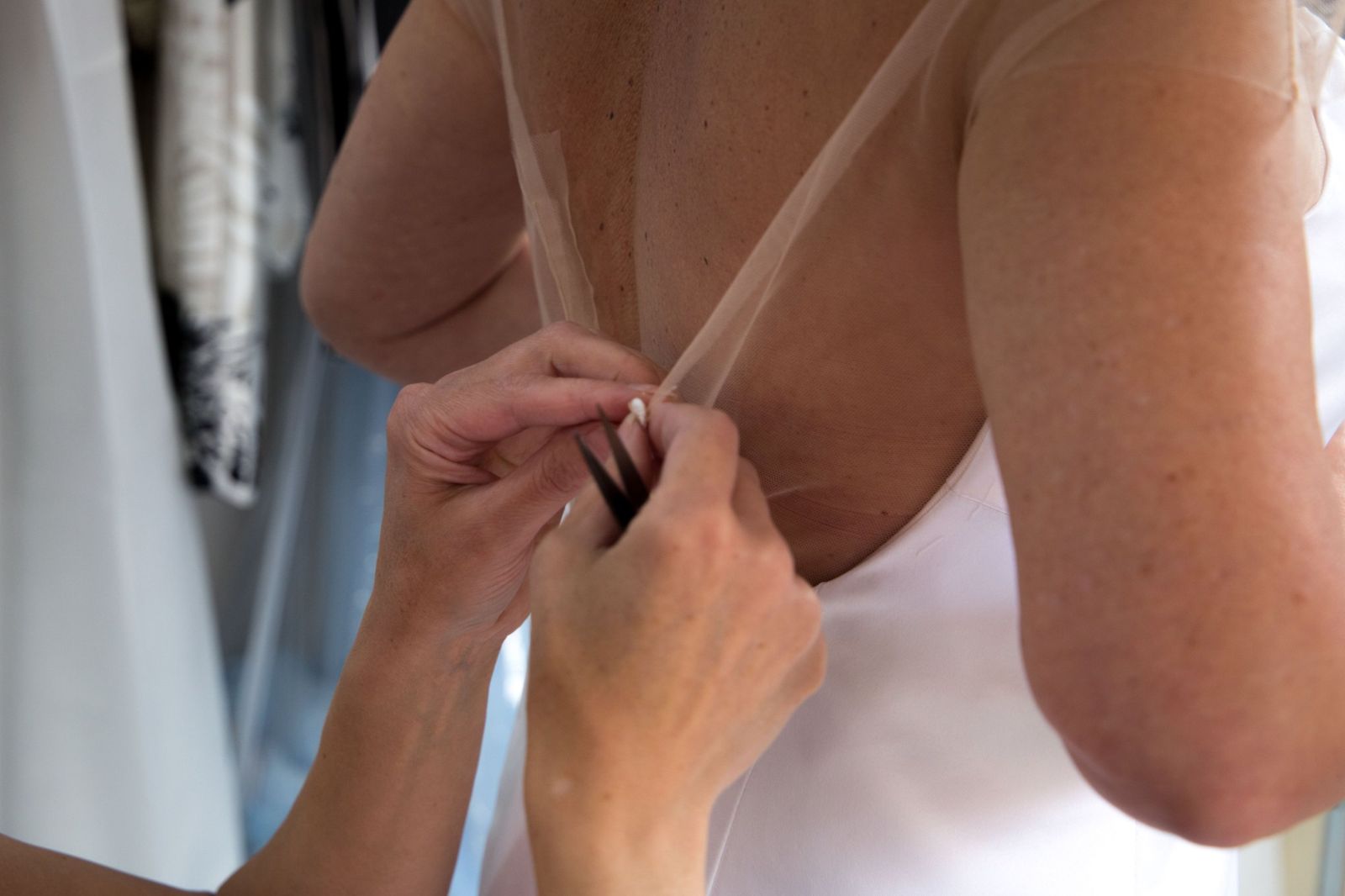
Your first wedding dress fitting is an exciting moment. It’s when your gown starts to be adjusted to fit you properly and truly becomes your dress. After spending time finding the right gown, this is the stage where it begins to take shape and feel more personal. The goal of the fitting is not only to adjust the dress but also to make sure you feel comfortable and confident wearing it.
To get the most out of your wedding dress alterations appointment, it helps to come prepared. Bringing the right shoes, undergarments, and accessories can make the process smoother and help your seamstress achieve the best fit.
With a little preparation, your fitting can be a relaxed and enjoyable part of your wedding planning.
Here are some helpful tips to keep in mind.
Wedding Dress Alterations: What to Wear to Your First Wedding Dress Fitting
1. Choose the Right Undergarments
Choosing the right undergarments is very important for achieving the best fit during your wedding dress alterations.
If you already have the bra, shapewear, or slip you plan to wear on your wedding day, it's advisable to bring those specific items with you.
Proper support can significantly alter how your dress fits, how the fabric drapes, and your overall comfort level. Even minor changes in undergarments—such as switching from a strapless bra to one with straps—can impact how the neckline, bodice, or seams align, making consistency essential during your wedding dress fittings.
For optimal results, opt for nude or seamless styles that won't be visible through delicate fabrics or create unwanted lines. This not only aids your seamstress in working on your gown but also provides you with a clearer idea of how your dress will look and feel on your wedding day. Consider your undergarments as the foundation of your entire bridal ensemble—when the foundation is correct, everything else falls into place beautifully.
Bring the bra, shapewear, or slip you plan to wear on your wedding day to your dress fittings. Proper support affects the dress fit, fabric drape, and your comfort. Even small changes in undergarments can impact the neckline, bodice, or seams, so consistency is crucial.
2. Bring Your Wedding Shoes (or Similar)
Adjusting the hem is one of the most common and important parts of wedding dress alterations. The length of the gown affects both how it looks and how comfortable it is to wear.
Bringing your actual wedding shoes—or at least a pair with the same heel height—makes a substantial difference during the wedding dress fitting. The hem must be tailored precisely so that the front of the dress just skims the floor, or sits just above it, and you can walk without stepping on it.
Wearing the right shoes ensures your seamstress can measure the hemline accurately, preventing last-minute surprises like a dress that's too short or too long on your wedding day. It also lets you experience how the gown will move as you walk, stand, or dance.
Since many brides switch to a second pair of shoes for the reception, it can be beneficial to bring those along too, so your seamstress can advise you on how the hemline will work with both pairs. With the correct shoes at your fitting, you'll leave knowing your dress length is not only perfect but also ideally suited to your plans for the day.
Bringing your wedding shoes—or a pair with the same heel height—is crucial for the fitting. The hem must be tailored so the front of the dress just skims the floor, or sits just above it, without causing tripping or dragging.
3. Wear Comfortable Clothing for Before and After
During your wedding dress alterations appointment, you'll be changing in and out of your gown several times, so it's wise to wear something simple and practical.
Choose an outfit that's easy to slip on and off, like a loose-fitting dress, a comfy jumper with soft leggings, or a flowy top with elasticated trousers. Avoid anything with complicated zips, buttons, or tight necklines, as these can slow you down and become frustrating with repeated changes.
Choosing comfortable clothing not only speeds up the process and reduces stress, but it also helps protect your hair and makeup. With easy-to-remove outfits, you won't risk smudging your makeup or tangling your hair each time you change.
Many brides also find it beneficial to bring a lightweight wrap or cardigan, so they feel covered and comfortable between fittings.
If you have long hair, bring a hair tie or clip so you can tie it up. This keeps your hair out of the way while your seamstress pins the back and neckline of your dress.
Read more:
- What to Expect During Your Wedding Dress Alterations: A Step-by-Step Guide
- Common Mistakes Brides Make with Wedding Dress Alterations
Extra Details That Matter
1. Ensure Your Wedding Dress is Clean and Fresh
It might sound obvious, but it’s worth mentioning: always bring a clean gown to your wedding dress fitting.
Fabrics, especially delicate ones like silk, lace, or satin, can easily hold onto scents, light marks, or even a trace of perspiration from previous try-ons, and this can complicate the alteration process.
A fresh, well-kept dress allows the seamstress to handle the fabric with ease and concentrate fully on perfecting the fit, rather than being distracted by small fabric concerns. Think of it as giving both you and your dress the best possible start for the journey ahead—arriving fresh, cared for, and ready to be transformed into something truly special.
If your dress needs a refresh before your fitting, we also offer professional wedding dress cleaning.
2. Keep Makeup Minimal
It’s natural to want to look your best for your dress fitting, but it’s best to keep your makeup light and simple.
Products like lipstick, heavy foundation, or bronzer can easily transfer onto delicate fabrics, and some stains are very difficult to remove. Keeping your makeup minimal helps protect your gown during the fitting.
A little mascara, light powder, or lip balm is usually enough to feel put together without risking marks on the dress. This also keeps the focus on the gown itself.
It’s also best to avoid fake tan, body lotion and strong perfume on the day of your fitting, as they can mark or scent delicate fabrics.
Products like lipstick, heavy foundation, or bronzer can easily transfer onto delicate fabrics, and once on, many of these marks are difficult—or even impossible—to remove.
Wedding Dress Alterations in Peterborough
Looking for a professional wedding dress seamstress in Peterborough?
At iStitch, we specialise in wedding dress alterations, bridesmaid and prom dress alterations and customisation. On the big day itself, our bridal attendant service can help you into your dress and make sure everything sits perfectly.
Contact us to book your free consultation for wedding dress alterations in Peterborough.
See what our clients have to say about us.

Expert seamstress advice from iStitch
Over 35 years of dressmaking experience, Peterborough. About us